How Long Is a School Bus? Everything You Need to Know
Have you ever looked at a big, bright yellow school bus and wondered, “How long is a school bus?” It is a great question! These buses are a huge part of our daily lives, taking millions of kids to school every single morning. Because they come in many different shapes and sizes, there is no single answer for everyone. Some are small enough to fit in a large driveway, while others are very long to carry many students. Understanding these differences can help us learn how our transportation systems work and why buses are built the way they are. Let’s dive in and explore the world of school bus sizes together.
Why Are There Different Sizes?
School buses are built for different needs. A small school might only need a tiny bus, while a busy city school needs a giant one. The length depends on how many students ride it. Some routes have only a few kids, so a short bus works perfectly. Other routes have many kids, so a very long bus is required to get everyone there on time. Engineers carefully choose the right size for every specific job.
The Shortest School Buses
The smallest buses are often called “Type A” buses. These look a bit like large vans. They are usually very easy to drive and turn corners. These small buses are often used for children with special needs or for rural routes with few students. They are much shorter than the big ones you might see in a movie. Because they are compact, they can travel down narrow roads easily.
Standard School Bus Lengths
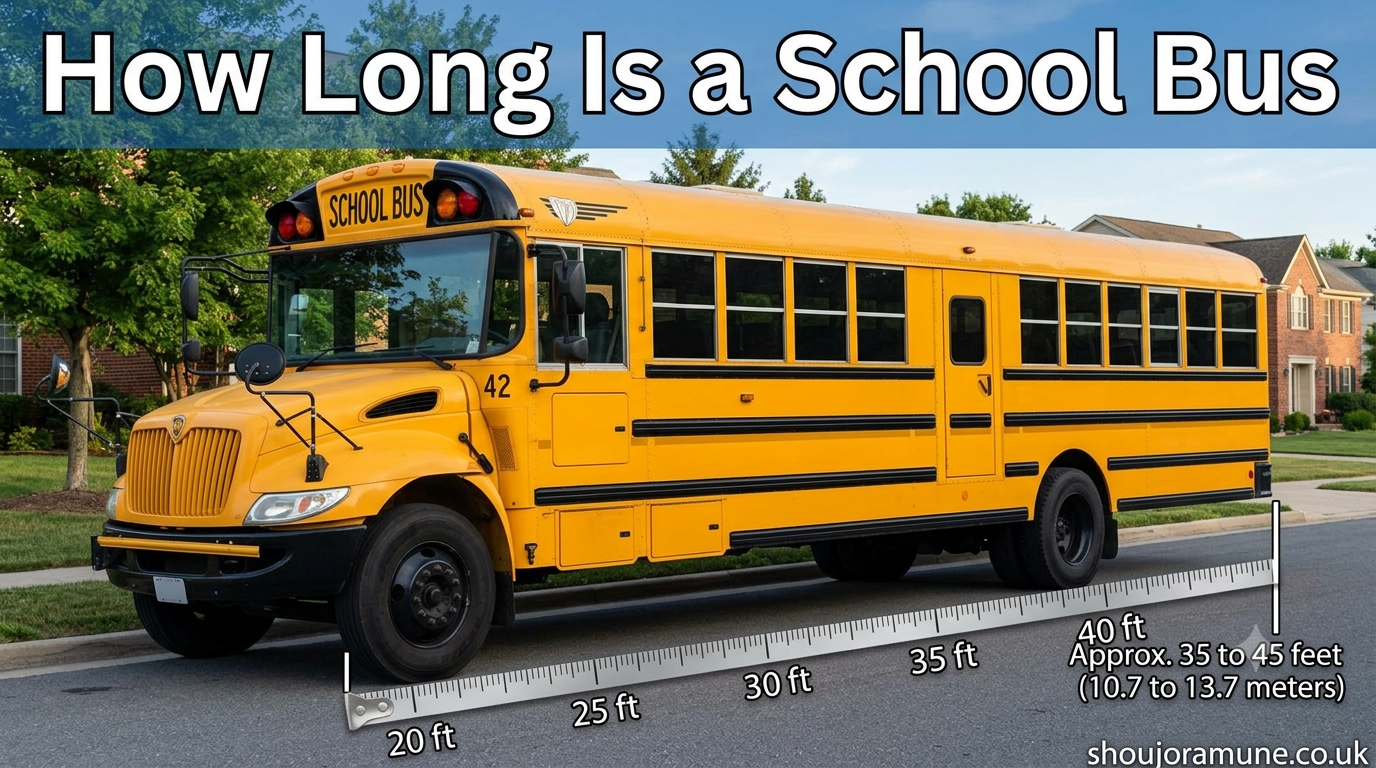
Most of the yellow buses you see are called “Type C” buses. These are the classic buses with the long hood in the front. A standard size for these buses is often between 35 and 45 feet long. They are very sturdy and built to carry many students safely. You will see these in almost every town across the country. They are the most common bus on the road.
The Big Giant Buses
The largest buses are known as “Type D” buses. These do not have a hood in the front; the front is flat. These big buses can be up to 45 feet long or even slightly more. They are designed to hold the maximum number of students, sometimes over 80 people! Because they are so long, the drivers need to be very skilled to steer them through tight spots.
How Many Students Fit Inside?
The length of the bus directly changes how many students can sit inside. A small bus might hold 15 students or fewer. A medium bus might hold around 30 to 50 students. The largest buses can hold 80 or more students depending on the seat arrangement. This is why schools have so many different bus sizes in their parking lots!
Understanding Vehicle Dimensions
When experts talk about bus size, they use the word “dimensions.” This includes the length, width, and height. The length is important for parking and turning. The width is important for fitting on the road safely. Knowing these numbers helps bus drivers stay safe. They have to know exactly how much space their bus needs to move around corners.
Fun Facts About School Bus Turning
Did you know that long buses turn differently than cars? Because they are so long, the back wheels follow a different path than the front wheels. This is called the “off-tracking” effect. If you watch a bus turn, you might notice the back swings out a little. This is why drivers always take turns very slowly and carefully.
Safety and Bus Engineering
Safety is the number one goal for all school buses. No matter if they are short or long, they are built to be tough. They have strong frames and special lights to keep everyone safe. Every year, inspectors check the buses to make sure they are in great shape. Everything, from the tires to the lights, is tested for safety.
The Future of School Buses
The world is changing, and so are our buses! Many schools are now starting to use electric buses. These are very exciting because they do not have loud engines or smelly exhaust. Electric buses come in the same sizes we are used to, from small to very long. They are a big step toward a cleaner and quieter future for everyone.
Comparing Bus Types in a Table
To help you see the differences, here is a quick guide to common bus types.
| Bus Type | Best For | Typical Length | Passenger Capacity |
| Type A | Small groups/Narrow roads | 20–25 feet | Up to 15 |
| Type C | Standard school routes | 35–45 feet | 50–70 |
| Type D | Large groups/High traffic | 40–45 feet | 75–90 |
Conclusion
Now you know the answer to “how long is a school bus?” It really depends on the bus type and how many students it needs to carry. Whether it is a small van-like bus or a giant flat-front bus, they all have a very important job to do. We hope you enjoyed learning about these big, yellow friends of the road! Next time you see a bus, you can try to guess which type it is. Do you want to learn more about how buses work or maybe how they stay safe? Let us know in the comments below!
Frequently Asked Questions
1. Is a school bus 40 feet long?
Yes, many standard school buses are around 40 feet long. Some are shorter, and some are a bit longer.
2. Why are school buses yellow?
They are painted a special color called “National School Bus Glossy Yellow.” This color is easy to see, even in early morning fog.
3. How many students can a large bus hold?
A large Type D bus can hold as many as 90 students, though many carry fewer for comfort.
4. Are all school buses the same size?
No, they come in many sizes depending on the needs of the school and the route they drive.
5. How wide is a typical school bus?
Most school buses are about 8 feet wide, which helps them stay centered in a normal traffic lane.
6. Do school bus drivers need special training?
Yes! Because of the size and the important job they have, drivers must pass special tests to earn their license.