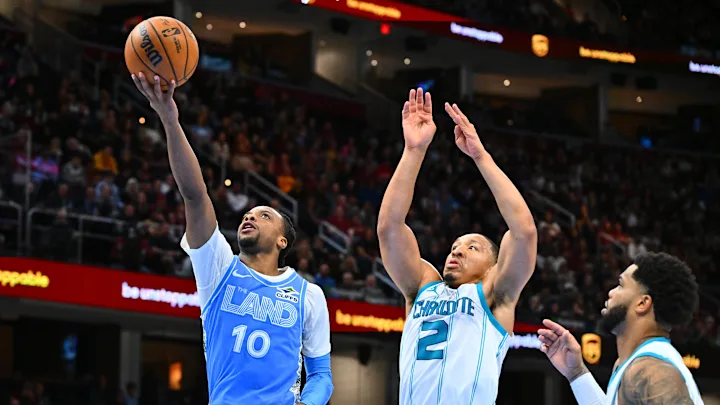
76ers vs Cleveland Cavaliers Match Player Stats Full Box Score and Performance Breakdown
When two Eastern Conference contenders like the Philadelphia 76ers and the Cleveland Cavaliers share the floor, the result is usually a high-intensity game defined by star power, tactical adjustments, and eye-catching individual performances. This article takes a deep dive into the 76ers vs Cleveland Cavaliers match player stats, breaking down how each key player contributed, how the numbers tell the story of the game, and what those performances mean going forward.
Rather than just listing a box score, this breakdown focuses on context—why certain stats mattered, how momentum shifted, and which players truly influenced the outcome on both ends of the court.
Setting the Stage: A Clash of Styles
The 76ers and Cavaliers approach the game differently, which makes their matchups compelling from a statistical perspective. Philadelphia often leans on elite guard play and interior strength, while Cleveland thrives on balanced scoring, defensive versatility, and strong ball movement.
In this matchup, the contrast was clear from the opening quarter. The Cavaliers looked comfortable pushing the tempo and spreading the floor, while the 76ers focused on controlled possessions and attacking mismatches. The 76ers vs Cleveland Cavaliers match player stats reflect this stylistic battle throughout all four quarters.
Cleveland Cavaliers: Star Power Meets Efficiency
Donovan Mitchell’s Scoring Explosion
At the top of the Cavaliers’ stat sheet was Donovan Mitchell, whose scoring performance defined the game. Mitchell combined volume with efficiency, attacking from beyond the arc, creating off the dribble, and getting to the free-throw line when Philadelphia’s defense tightened.
From a statistical standpoint, his points total stood out, but what mattered just as much was how he scored. High shooting percentages, strong late-clock decision-making, and timely buckets in momentum-shifting moments made his line far more impactful than raw numbers alone.
In any discussion of 76ers vs Cleveland Cavaliers match player stats, Mitchell’s performance becomes the reference point.
Frontcourt Impact: Jarrett Allen and Evan Mobley
While Mitchell grabbed headlines, Cleveland’s big men quietly controlled crucial aspects of the game. Jarrett Allen’s rebounding numbers were a key factor, especially on the defensive glass, where he limited second-chance opportunities. His efficiency around the rim boosted his points total without forcing shots.
Evan Mobley contributed across multiple categories. His stat line may not have been flashy, but his defensive presence, help-side rotations, and ability to score in the mid-range showed up in advanced metrics and on-court impact. Together, Allen and Mobley gave Cleveland a reliable interior foundation.
Backcourt Balance and Ball Movement
Beyond the stars, the Cavaliers’ assist totals told an important story. Crisp passing, unselfish play, and smart spacing led to a healthy team assist number. Even role players who scored in single digits contributed by moving the ball, setting screens, and making the right read.
This balance is a recurring theme when analyzing 76ers vs Cleveland Cavaliers match player stats—Cleveland often wins the “connective tissue” battle that doesn’t always jump off the page.
Philadelphia 76ers: Individual Brilliance Amid Challenges
Tyrese Maxey’s Offensive Leadership
For the 76ers, Tyrese Maxey carried much of the offensive burden. His scoring output reflected his aggressive approach, using speed and shot creation to pressure Cleveland’s defense. Maxey’s ability to score in transition and attack gaps kept Philadelphia competitive, especially during stretches when the offense stalled.
Looking at the 76ers vs Cleveland Cavaliers match player stats, Maxey’s usage rate and points total highlight how central he was to the Sixers’ game plan.
Secondary Scoring and Supporting Cast
Beyond Maxey, Philadelphia relied on contributions from multiple players rather than one clear second star. Guards and wings chipped in with timely three-pointers, while bench players provided short bursts of energy.
However, the stats also reveal some inconsistency. Field-goal percentages varied widely, and several players struggled to maintain efficiency under Cleveland’s defensive pressure. Those dips showed up in plus-minus numbers and quarter-by-quarter scoring trends.
Rebounding and Interior Play
Philadelphia had moments of success on the boards, particularly on the offensive glass. Rebound totals were competitive, and second-chance points helped keep the scoreline respectable. Still, Cleveland’s interior defense limited easy finishes, forcing the 76ers into tougher shots than they would have preferred.
In the context of 76ers vs Cleveland Cavaliers match player stats, rebounding was one of the few areas where Philadelphia matched or exceeded Cleveland, even if it didn’t fully translate into points.
Quarter-by-Quarter Statistical Flow
First Quarter: Feeling Each Other Out
The opening period was statistically balanced. Both teams shot efficiently, and turnovers were limited. Scoring was spread out, suggesting a cautious approach as each side tested defensive schemes.
Second Quarter: Cleveland Takes Control
In the second quarter, Cleveland’s shooting percentages rose, particularly from three-point range. Assist numbers climbed as well, indicating smoother offensive execution. Philadelphia stayed close thanks to individual scoring, but the gap began to widen.
Third Quarter: Momentum Shift
The third quarter proved decisive. Cleveland’s defensive stats—steals, deflections, and contested shots—translated into fast-break points. The Cavaliers’ stars elevated their play, while the 76ers’ efficiency dipped.
Fourth Quarter: Closing Time
By the final period, the Cavaliers managed the game smartly. Free-throw efficiency, low turnovers, and steady scoring sealed the result. The 76ers vs Cleveland Cavaliers match player stats from the fourth quarter highlight composure and experience on Cleveland’s side.
Advanced Metrics That Tell the Real Story
Looking beyond traditional box score numbers reveals why the game tilted Cleveland’s way. Effective field goal percentage favored the Cavaliers, reflecting shot quality rather than volume alone. Assist-to-turnover ratio also leaned in Cleveland’s favor, reinforcing their disciplined approach.
Philadelphia’s advanced stats weren’t poor, but they showed reliance on difficult shot-making rather than sustainable offense. These deeper numbers add essential context when evaluating 76ers vs Cleveland Cavaliers match player stats.
Key Takeaways from the Match Player Stats
-
Cleveland’s stars delivered efficiently without sacrificing team flow.
-
Philadelphia leaned heavily on individual creation, especially in scoring.
-
Rebounding was competitive, but shot quality separated the teams.
-
Bench contributions favored Cleveland in terms of consistency rather than raw scoring.
Each of these insights emerges clearly when the full statistical picture is considered.
What These Stats Mean Moving Forward
For the Cavaliers, this matchup reinforced their identity as a balanced, disciplined team capable of explosive scoring when needed. The player stats suggest sustainability, not a one-off performance.
For the 76ers, the numbers highlight areas for growth—particularly offensive consistency and defensive adjustments against elite scorers. At the same time, individual performances show that the core talent remains strong.
Future meetings between these teams will likely hinge on whether Philadelphia can spread offensive responsibility more evenly and whether Cleveland can maintain its defensive intensity.
Conclusion: Numbers That Tell a Bigger Story
The 76ers vs Cleveland Cavaliers match player stats offer more than a snapshot of one game—they provide insight into team identities, strengths, and areas for improvement. Cleveland’s blend of star scoring and team efficiency proved decisive, while Philadelphia showcased resilience and individual brilliance despite the result.
For fans, analysts, and fantasy players alike, this matchup was a reminder that basketball is as much about how points are created as how many are scored. Detailed stat breakdowns like this help uncover the story beneath the scoreboard.
On shoujoramune, we believe every game has layers worth exploring, and this clash between the 76ers and Cavaliers was no exception.