Lunar New Year: Celebrating Culture, Tradition, and Renewal
The Lunar New Year, often referred to as the Chinese New Year or Spring Festival, is one of the most significant traditional celebrations in many Asian cultures. It marks the beginning of a new year based on the lunar calendar, which differs from the Gregorian calendar used globally. This festival is celebrated with vibrant customs, symbolic rituals, and gatherings that emphasize family, prosperity, and renewal. Across countries like China, Vietnam, Korea, and Mongolia, the Lunar New Year is a time for honoring ancestors, welcoming luck, and setting intentions for the year ahead.
Understanding the Lunar New Year involves exploring its historical roots, traditional customs, and modern adaptations. It is more than a holiday; it is a cultural phenomenon that embodies the values and beliefs of millions of people worldwide.
History of the Lunar New Year
The origins of the Lunar New Year trace back thousands of years to agrarian societies in ancient China. Early communities observed the lunar calendar to determine the best times for planting and harvesting crops. Over time, these seasonal markers evolved into a series of festivals, the most prominent of which became the New Year celebration. According to legend, a mythical beast called Nian would emerge to terrorize villages at the start of the year. People discovered that Nian feared loud noises, fire, and the color red, which led to customs like setting off fireworks and decorating homes with red lanterns and banners.
Beyond China, neighboring countries adopted and adapted these traditions according to local culture. For example, Vietnam celebrates Tet, while Korea observes Seollal, each incorporating unique customs while honoring the lunar calendar. This shared heritage underscores the importance of the Lunar New Year in East and Southeast Asian culture.
Lunar Calendar and Zodiac
Central to the Lunar New Year is the lunar calendar, which is based on the cycles of the moon. Unlike the solar Gregorian calendar, the lunar calendar has months that begin with the new moon. Each Lunar New Year starts on the first day of the first lunar month, usually between late January and mid-February.
A key feature of this calendar is the Chinese zodiac, a 12-year cycle where each year is represented by an animal sign. The zodiac animals—Rat, Ox, Tiger, Rabbit, Dragon, Snake, Horse, Goat, Monkey, Rooster, Dog, and Pig—are believed to influence the personality traits and fortunes of individuals born in that year. The zodiac also plays a central role in Lunar New Year traditions, from decorations to gifting practices, reflecting hopes for prosperity, health, and happiness in the new year.
Traditional Lunar New Year Customs
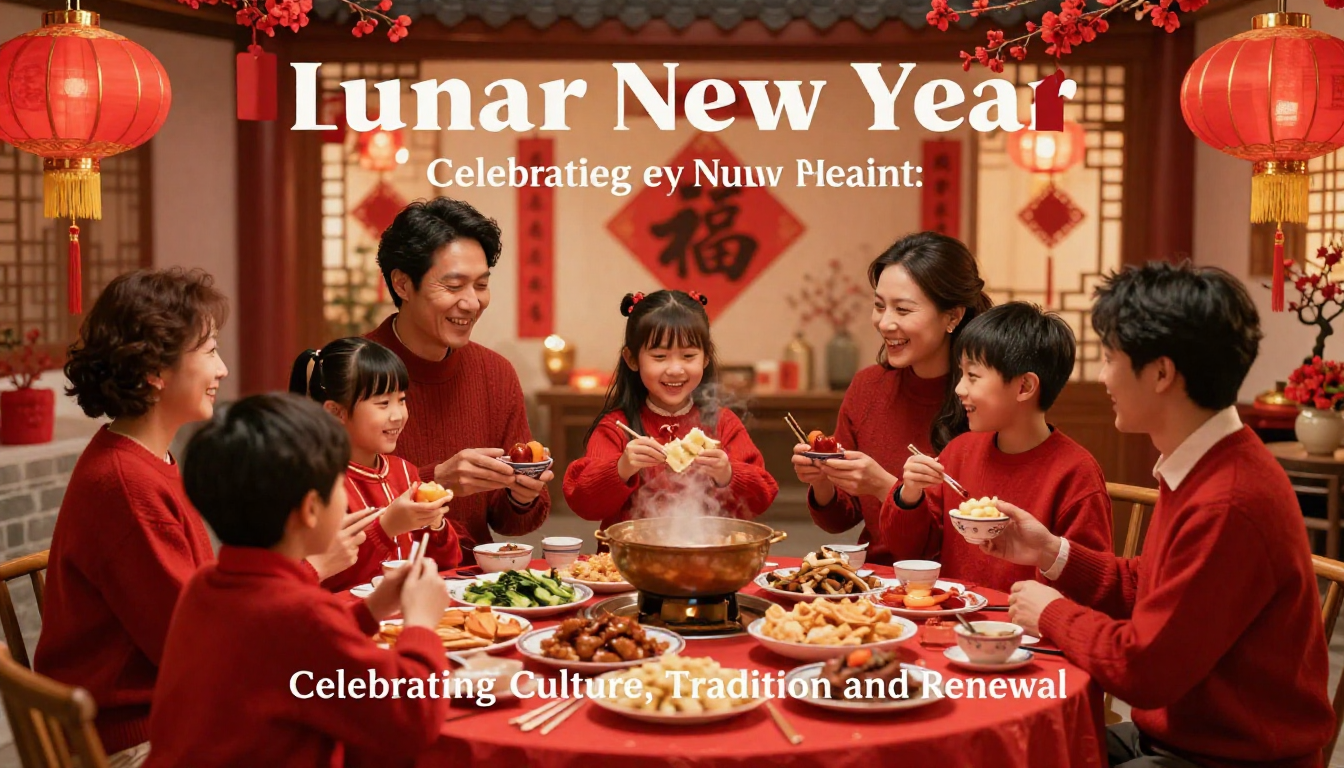
The Lunar New Year is celebrated with a rich array of customs, many of which focus on family unity, prosperity, and warding off evil spirits. One of the most important practices is the reunion dinner, held on New Year’s Eve. Families gather to share symbolic dishes, such as fish for abundance, dumplings for wealth, and sweet rice cakes for a prosperous year.
Another widespread tradition is the giving of red envelopes, known as hongbao in Chinese culture. These envelopes contain money and are gifted to children, unmarried adults, and sometimes employees, symbolizing luck and protection.
Homes are also thoroughly cleaned before the new year to sweep away bad luck and make room for good fortune. Decorations like red couplets, lanterns, and paper cuttings are displayed to invite happiness and ward off evil spirits. Fireworks and firecrackers are commonly used to celebrate, based on the ancient legend of Nian, and they create a festive atmosphere that fills streets and communities.
Lunar New Year Foods and Their Symbolism
Food plays a central role in Lunar New Year celebrations, with each dish carrying symbolic meaning. Dumplings, resembling ancient Chinese silver ingots, are believed to attract wealth. Fish, typically served whole, represents abundance and prosperity. Sweet rice balls, or tangyuan, symbolize family unity, while sticky rice cakes signify growth and progress.
In Vietnam, during Tet, special cakes called bánh chưng and bánh tét are made from glutinous rice and filled with meat or beans, representing the earth and sky. In Korea, families prepare tteokguk, a rice cake soup that symbolizes aging gracefully and gaining wisdom. Across all regions, the foods emphasize gratitude for the past year and hopes for a bountiful and happy future.
Lunar New Year Activities and Festivities
Beyond family gatherings, Lunar New Year celebrations include a variety of public activities. Lion and dragon dances are performed in streets to scare away evil spirits and attract luck. Temples and ancestral shrines are visited to offer prayers for health, fortune, and peace.
Festivals also feature parades, cultural performances, and traditional music. In modern cities, communities organize lantern festivals, art exhibitions, and craft workshops that showcase traditional skills while engaging younger generations. Children often participate in games and storytelling sessions about the zodiac animals and folklore associated with the new year.
Lunar New Year Around the World
While the Lunar New Year is rooted in Asia, it is celebrated globally due to migration and diaspora communities. In cities like San Francisco, London, and Sydney, large-scale parades, cultural exhibitions, and culinary events allow residents and visitors of diverse backgrounds to experience the traditions. Lunar New Year has become a bridge for cultural exchange, education, and community building.
In some countries, governments and cultural organizations officially recognize the holiday, granting public holidays or organizing events that honor the cultural heritage of Asian communities. This global recognition underscores the enduring appeal and cultural significance of the Lunar New Year.
Modern Adaptations and Trends
With globalization and digital technology, Lunar New Year celebrations have evolved while preserving traditional values. Online greetings, digital red envelopes, and virtual family reunions have become increasingly popular, especially for families separated by distance. Social media campaigns and mobile applications allow participants to share photos, stories, and festive wishes.
Contemporary celebrations often blend tradition with modern entertainment, such as concerts, fashion shows, and fusion cuisine events. Despite these innovations, the core themes of family, gratitude, and renewal remain central, ensuring that the Lunar New Year continues to resonate across generations.
Conclusion
The Lunar New Year is a vibrant celebration that intertwines history, culture, and community. From its ancient origins to modern global adaptations, it remains a powerful expression of family bonds, cultural identity, and hope for the future. Through symbolic foods, festive customs, and communal gatherings, millions around the world embrace the values of prosperity, health, and renewal. The holiday is more than a new calendar year—it is a reminder of the enduring human desire for connection, joy, and meaningful tradition.
By understanding and participating in these celebrations, individuals not only honor cultural heritage but also promote unity and cross-cultural appreciation. Whether through family meals, community events, or personal reflection, the Lunar New Year invites everyone to pause, celebrate, and step into the new year with optimism and gratitude.
FAQs About Lunar New Year
What is the date of Lunar New Year?
The date of the Lunar New Year varies each year, as it is based on the lunar calendar. It typically falls between January 21 and February 20.
Why is red significant during Lunar New Year?
Red symbolizes good luck, joy, and warding off evil spirits. It is prominently used in decorations, clothing, and red envelopes.
What are traditional Lunar New Year foods?
Common foods include dumplings, fish, sticky rice cakes, sweet rice balls, and regional specialties like bánh chưng in Vietnam or tteokguk in Korea.
How long does the Lunar New Year celebration last?
The celebration usually lasts 15 days, culminating with the Lantern Festival on the 15th day of the lunar month.
Do all Asian countries celebrate Lunar New Year the same way?
No, while many Asian countries celebrate based on the lunar calendar, customs and foods differ. China, Vietnam, Korea, and Mongolia each have unique traditions and rituals.